Nano Banana 2: Google's New AI Image Model Explained
February 26, 2026 · 7 min read
Google just shipped Nano Banana 2, and the benchmarks are hard to ignore. Sub-500ms latency on mobile hardware, a 12.4 FID score that beats Midjourney, and API costs cut by up to 40% compared to Nano Banana Pro. Whether you're building with the API or generating images in Gemini, here's everything worth knowing about the new model.
What Is Nano Banana 2?
Nano Banana 2 is Google DeepMind's latest image generation model, officially designated Gemini 3.1 Flash Image. It launched on February 26, 2026, as the successor to both the original Nano Banana (August 2025) and Nano Banana Pro (November 2025).
The pitch is straightforward: take the quality and advanced features of Nano Banana Pro and run them at Gemini Flash speeds. That means Pro-level output without the Pro-level latency or pricing.
Nano Banana 2 is now the default image model across the Gemini app (Fast, Thinking, and Pro tiers), AI Mode, Google Lens, Google Ads, and Google's Flow creative tool. If you're a Google AI Pro or Ultra subscriber, you can still access Nano Banana Pro through the image regeneration menu.
Key takeaway: Nano Banana 2 replaces Nano Banana Pro as the default across Google's ecosystem while keeping Pro-level capabilities.
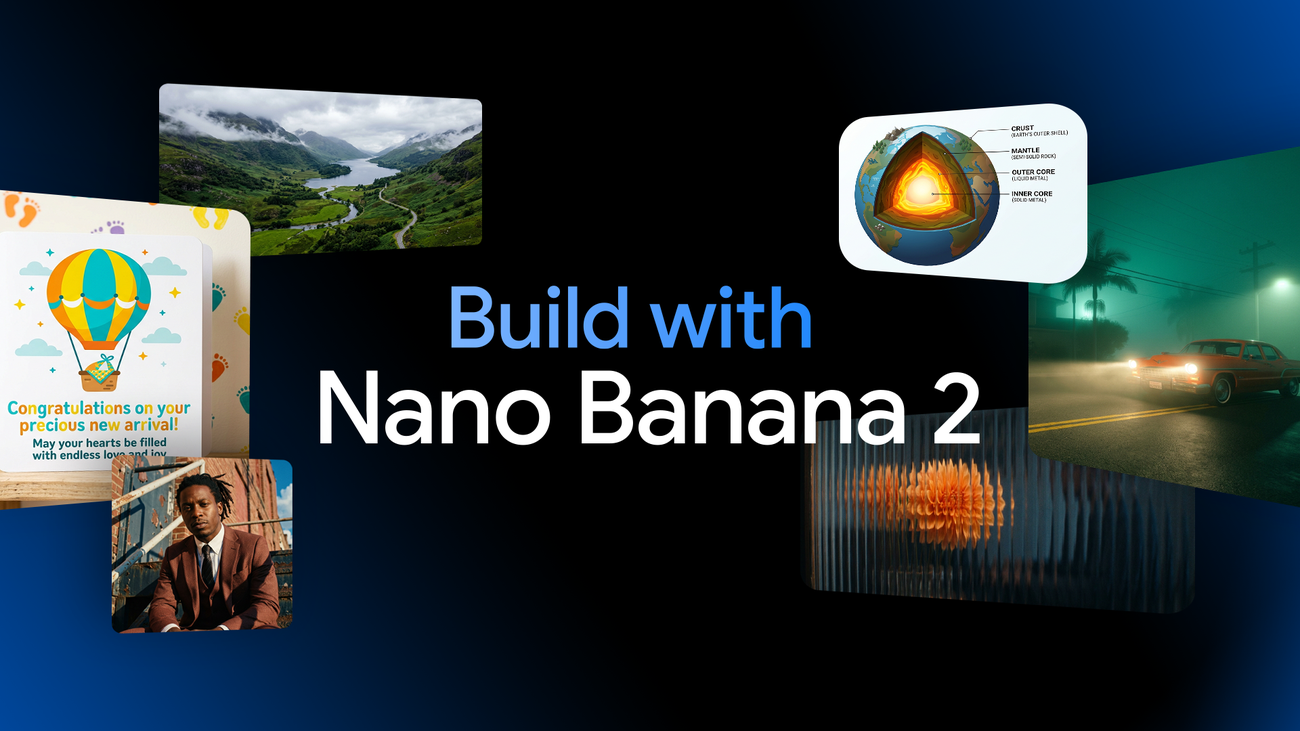
Nano Banana 2 Key Features and What Changed
Several capabilities that were previously locked behind Nano Banana Pro are now standard in Nano Banana 2.
Subject Consistency and Object Fidelity
The model maintains character resemblance across up to five subjects in a single workflow. It also preserves fidelity of up to 14 objects simultaneously. This matters for storyboarding, multi-character scenes, and any project where visual consistency across frames is critical.
Real-Time Web Grounding
Nano Banana 2 doesn't rely solely on static training data. It can pull from Google's knowledge base and real-time web search results during generation. If you prompt it to generate an image of a specific public figure, landmark, or product, the model cross-references live data for accuracy.
Text Rendering
Text in AI-generated images has historically been a weak point across all models. Nano Banana 2 pushes accuracy to 94% on prompts under 25 characters (Skywork AI, 2025). It also handles translation and localization within images, making it viable for marketing mockups and greeting cards.
Resolution and Output
The model supports 512px to 4K resolution across multiple aspect ratios. Google describes the output as having "richer textures, sharper details, and more vivid lighting" compared to the original Nano Banana.
Previously Pro-Only Features
Infographic generation, note-to-diagram conversion, and data visualization are all now available in Nano Banana 2 at no premium.
Nano Banana 2 Performance Benchmarks
Here's where it gets interesting for anyone evaluating this model technically.
Latency
On a high-end desktop at 512x512 resolution:
- p50: 0.86 seconds
- p90: 1.02 seconds
- p99: 1.28 seconds
On mid-range mobile hardware, latency drops to sub-500 milliseconds. In a live demo, Google showed the model generating roughly 30 frames per second at 512px, effectively real-time synthesis (MarkTechPost, 2026).
Throughput
Desktop throughput benchmarks show 355 img/min (FP16) and 378 img/min (INT8). The model also benefits from warm starts, with p50 latency dropping about 10% after three consecutive runs (Skywork AI Benchmark, 2026).
Quality Scores
- FID score: 12.4 (lower is better for photorealism)
- CLIPScore: 0.319 +/- 0.006
- LPIPS: 0.245 +/- 0.011
For context, Midjourney's FID sits at 15.3. A lower FID means the generated images more closely match the statistical distribution of real photographs.
Nano Banana 2 Pricing and API Access
The cost reduction is significant, especially at higher resolutions.
| Resolution | Nano Banana 2 | Nano Banana Pro | Savings |
|---|---|---|---|
| 0.5K | $0.045 | N/A | New tier |
| 1K | $0.067 | $0.134 | ~50% |
| 2K | $0.101 | $0.134 | ~25% |
| 4K | $0.151 | $0.240 | ~37% |
That's up to 40% lower API cost overall compared to Nano Banana Pro (The Decoder, 2026).
How to Access the API
- Model ID:
gemini-3.1-flash-image-preview - Platforms: Google AI Studio, Vertex AI, Gemini API, Gemini CLI
- Free credits: Available through Google's Flow creative tool
The model is currently in preview. Enterprise users can deploy through Vertex AI for production workloads.
How Nano Banana 2 Compares to Midjourney and DALL-E
Speed
This is where Nano Banana 2 pulls ahead decisively. Generation takes 3 to 5 seconds, compared to 20 to 30 seconds for Midjourney V7 and 15 to 25 seconds for DALL-E 3 (Skywork AI, 2025). That speed difference compounds fast when you're iterating on 20+ variations.
Photorealism
Nano Banana 2's 12.4 FID score beats Midjourney's 15.3. In practical terms, Midjourney images sometimes show subtle tells: overly dramatic lighting, too-perfect skin, or that hard-to-define "AI look." Nano Banana 2 trends closer to photographic realism.
Text Rendering
At 94% accuracy, Nano Banana 2 significantly outperforms Midjourney's 71%. Out of 100 prompts with text, only six needed manual correction with Nano Banana 2. With Midjourney, nearly a third did.
Where Competitors Still Win
Midjourney remains stronger for artistic and stylized compositions. If you want highly stylized, expressive imagery with a particular aesthetic, Midjourney's creative defaults are still hard to beat.
DALL-E 3's tight integration with ChatGPT makes it better for conversational iteration, where you refine an image through back-and-forth dialogue rather than precise prompting.
Key takeaway: Nano Banana 2 leads on speed, photorealism, and text accuracy. Midjourney leads on artistic style. DALL-E leads on conversational workflows.
Limitations Worth Knowing
No model is perfect, and Nano Banana 2 has clear boundaries.
Complex multi-edit requests can overwhelm it. Asking the model to replace a background, change a subject's pose, and alter lighting all at once tends to produce softer, less detailed output. Break complex edits into separate steps for better results.
Long text accuracy drops off. The 94% accuracy figure applies to text under 25 characters. For longer strings, success rates fall to 60 to 70% and decline further with length.
Usage caps exist. Free-tier Gemini users face daily generation limits. API users need to plan around quotas, token counts, and rate limits, especially for high-volume production workloads.
SynthID watermarking is mandatory. Every output includes Google's invisible SynthID watermark and is interoperable with C2PA Content Credentials. You cannot generate "clean" images without AI disclosure markers. For commercial use, plan around this requirement.
Inconsistency on edge cases. Like all generative models, results can vary. Prompts that are ambiguous or extremely specific may produce inconsistent output across runs.
Where to Try Nano Banana 2
You have several options depending on your use case:
- Gemini app at gemini.google.com for casual use and quick generation
- Google AI Studio for API experimentation with free credits
- Vertex AI for enterprise and production deployment
- Gemini CLI for developer workflows
- Google Flow for creative projects with free credits included
- Google Lens and AI Mode in Search for on-the-go generation
The model is live now across all these platforms as of February 26, 2026.
The Bottom Line
Nano Banana 2 is a meaningful step forward for AI image generation. It makes Pro-level quality accessible at Flash-level speed and significantly lower cost. The benchmarks back it up: faster than Midjourney by 4 to 10x, better photorealism scores, and near-perfect text rendering.
The limitations are real but manageable. Complex multi-edits need to be broken into steps, long text still struggles, and SynthID watermarking is non-negotiable.
Head to Google AI Studio to try Nano Banana 2 with the API, or open the Gemini app to start generating right now.
Sources:
- Google Blog - Official Announcement - Nano Banana 2 launch details
- Google Blog - Developer Guide - API access and developer features
- 9to5Google - Gemini app rollout and feature details
- MarkTechPost - Sub-second synthesis performance
- TechCrunch - News coverage